It took me a while to settle on a political ‘name’ for myself that I liked. I’m not a Conservative, since most of what I would have wanted to conserve has already been destroyed (and I differ from most American Conservatives on a lot of points). I don’t like ‘Reactionary’ because it makes it sound like a knee-jerk, unthinking response to something I don’t understand (when, of course, anyone who holds views like mine are obviously working against the trend of the time). I’ve tried ‘Tory’, but that’s saddled with the baggage of the English political party. ‘Monarchist’ is fitting, but both too broad and too narrow (I don’t favor just ‘rule by one’, and I don’t necessarily object to republics).‘Royalist’ is good, but tends to be mixed up with Monarchist, even though it’s not the same thing, and again, I’m not categorically against republican government.
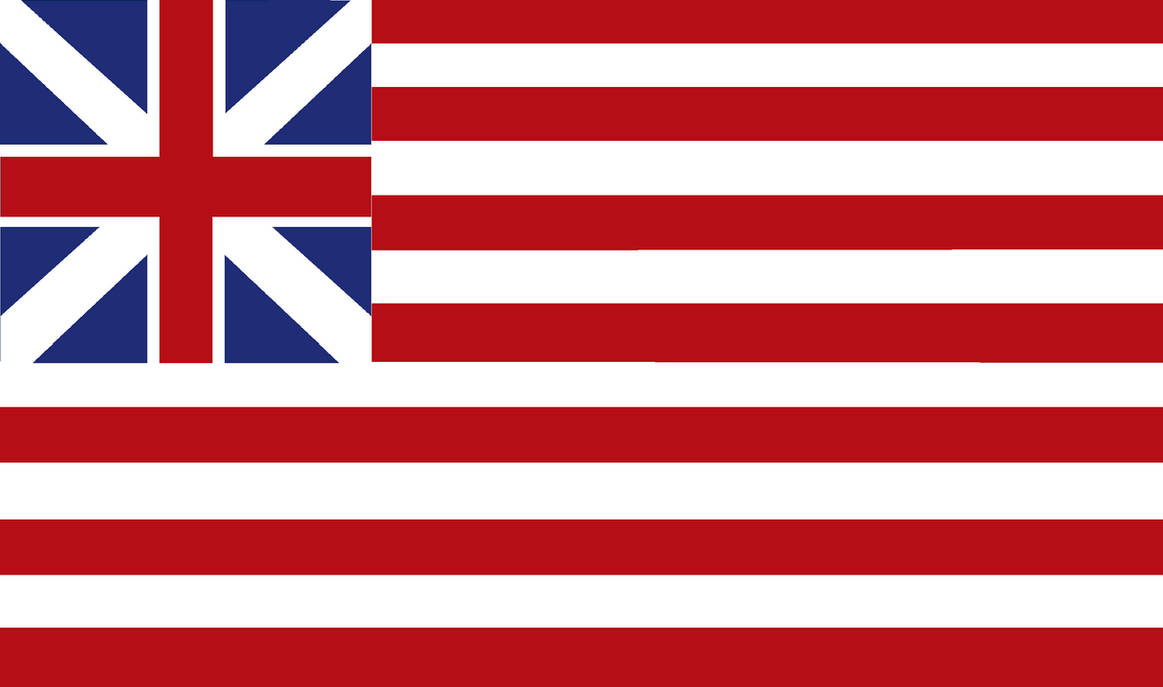
In the end, I’ve settled on ‘Loyalist’. I like it because it is a historically American position, but connotes monarchy and continuity with Christian, European, British culture. What it amounts to is that I am an American who rejects the ideology of the Revolution and of the republic it gave birth to. Yes, looking back on the Revolution I favor the British side, but more fundamentally it is that I reject what has become the guiding philosophy of America as expressed in the Declaration of Independence and I ground my patriotism in other things. Not that I want to see the overthrow of our republic, but that I’d rather see it informed by traditional Christian principles of government and society than with Lockean Enlightenment ideals.
Short version: I’m a non-Liberal American. Not a whole lot of us, and we’ve been politically non-existent since the 1780s at least.
Now, when I say Liberalism, I’m referring to the whole panoply of post-Hobbsean, post-Lockean political philosophy: the idea that governments exist to secure individual liberty and equal rights and are properly an embodiment of the popular will. For instance:
“We hold these truths to be self-evident: that all men are created equal, that they are endowed by their creator with certain unalienable rights, that among these rights are life, liberty, and the pursuit of happiness, that to secure these rights governments are instituted among men deriving their just powers from the consent of the governed…”
All this I think either requires major qualification (what does ‘created equal’ mean here?) or is just sheer self-contradictory nonsense (and I don’t know what Jefferson thinks ‘self-evident’ means, but this sure isn’t it).
I don’t have space to go into a full-scale examination of Liberalism to lay out all my reasoning. If I have time someday I will. The short version is that I reject Liberty, Equality, and Fraternity in favor of loyalty to Throne, Altar, and Hearth. I think Calvin and Hobbes are only worth listening to if they’re a boy and a tiger.
As for the Constitution, I think it’s mostly good; some parts of it I think are excellent (though at least one of those – appointment of Senators by state legislatures – we got rid of), others not so much. In any case, since it’s set as the official law of the land, I think our rulers are obliged to follow it, but I don’t expect any real protection from that.
My guiding political principles are respect for legitimate spheres of authority and the promotion of whatever creates a stable, healthy, well-directed society and allows people to lead secure, useful, happy lives, all grounded in an clear understanding of what is right and good. “Liberty does not consist in participation in government, but in men being secure in their lives and property”, as King Charles I put it. Which is to say, my political principles are my Catholic principles. Some would say “we can’t enforce one religious view over another,” but that’s not my problem: I’m not the one committed to a metaphysically neutral stance that can’t actually exist anyway.
Oddly enough, this tends to translate into favoring greater autonomy and independence for individuals and communities in a lot of areas than most of the Conservative or Libertarian types I’ve read. So, I’m against most anti-discrimination / equal-opportunity laws, but in favor of consumer protection laws. I favor subsidiarity (local matters being solved at the local level), ownership rights, individual private property, gun rights (to an extent), and anti-trust measures. Against vaccine requirements, but in favor of laws against abortion, contraception, and divorce. Favor some minimum wage laws, but not universally applied, and in any case, again, favor local authority in deciding the question. Favor environmental conservation, but not ‘environmentalism’. Favor private enterprise over corporations. Very much against income and property taxes.
The big difference between me and most other Americans, it seems to me, is that I don’t use the term ‘liberty’ to justify any of these. I use terms like ‘authority’ or ‘autonomy’ or ‘responsibility’ or ‘duty’ or (sometimes) ‘rights’, but rights grounded in one’s nature and role in society. My framework, politically, is “who has responsibility here, what is the extent of his responsibility, and what just authority comes with that responsibility?” and “does this measure encourage a good, healthy, stable society or not?” I don’t tend to think in terms of ‘People vs. Government,’ but of overlapping power structures and spheres of authority (not the same thing), and how you can use the one to check the other for the common good.
(By the way, does anyone else find it strange that the same people who buy into “government of the people, by the people, and for the people” are also the ones who regard the government and the people as mortal enemies?)
So, in the face of, say, a mandate forcing Catholic hospitals to pay for contraception, my position would be, not that “you must respect our freedom to live according to deeply held beliefs,” but rather “contraception is morally wrong and contrary to the common good, as it cripples the birthrate and encourages a kind of society we should be working to prevent, so even if you had the authority to order this you would be wrong in doing so. As it happens, you don’t, so go jump in a lake.”
Hence why I have no qualms about using the state to clamp down on corporations and such: I think that’s part of its job. Free markets are good to an extent, but they don’t stay free and competitive unless someone forces them to, and the only ones who will do so are those who aren’t directly involved. Not that I expect the current government to do much in that regard.
I’m still working all this stuff out (one reason I wrote this to try to get it straighter in my own mind), and of course it’s all complicated by the fact that we currently live under an anti-Christian government. But I figured I’d drop this summary in case anyone finds it interesting (though I’m sure I offended at least a few people. They may take solace in the fact that I’m a political non-entity, so this is pretty much all academic anyway).
 Serpent's Den
Eloquently and concisely spoken. I like the cut of your jib, Sir!
LikeLiked by 1 person
Huzzah! It’s a pity this all makes too much sense to catch on, though.
LikeLiked by 1 person