1. Teaching’s still going pretty well. I don’t like grading papers at all, since it’s hard to gauge how much of high school papers I should correct and how much I should let slide since they’re high schoolers. But I got a very positive evaluation from a visiting administrator, who was impressed that I actually knew the material.
2. I may be one of the only people who actually find grammar interesting. (The core sentence there is “I may be one.” The rest is a long prepositional phrase). I’m trying to find ways to have it make sense to my students by putting it in simple terms. So:
Who (subject) does what (verb) to what (direct object) for what (indirect object).
I will say, the kids are getting good at diagramming, and they seem to enjoy it; I actually get volunteers when it’s time to diagram on the board and have to turn people away.
Grammar’s a fun subject when one becomes acquainted with it.
3. I’ll be very glad when we’re done with the Revolution, because I’m growing very tired of that time period (one can only go over the same ground so often before it becomes tedious). I am glad to find that the kids seem to be interested in hearing the British side of things, since that’s a novelty to them that they don’t get in most books, especially at their level. I’m trying to be balanced in my presentation and stressing that each side had answers to the other, but I can see them being a little surprised to find that the British had a case at all, let alone that it isn’t unreasonable (though I left out some of the more, ah, forceful arguments from their side, like the fact that a few of the colonial charters explicitly allowed for Parliamentary taxation).
4. Anyway, it’ll be nice to get into the post-revolution world, with its chaotic failure and amazing last-gasp recovery. I’m starting to think making absurdly disastrous decisions and then salvaging the situation against all odds may be the real American genius: see the Revolution, War of 1812 (though both of those were…special cases), the Constitution, the Second Civil War, etc. We actually survived a terribly-designed revolutionary government without slaughtering each other, set up a reasonably-well-designed one, then genuinely recovered when that broke down. These things are amazing, near-one-of-a-kind accomplishments (I mean, as far as I know; I haven’t read the history of every nation on Earth yet). Honestly, I think this is what anyone who wants to study American history should focus on: our amazing recoveries.
5. Though speaking of near-unique accomplishments: consider that Japan during the Tokugawa Shogunate went two-and-a-half centuries with no wars, foreign or domestic. This just after a period of incessant civil wars. There’s also the fact that, prior to the Meiji Restoration, the Japanese only faced one foreign invasion (the Mongols in 1274 and 1281), which failed, and themselves only invaded foreign lands once (Korea in the 1590s…unless you count the annexation of Okinawa in 1609, which was kind of a complicated situation), yet during that whole time maintained one of the strongest military ethos in the world. So that when they came out of their isolation period, they were able to trade blows with a major western power and win within less than forty years.
Japan’s cool.
6. Also note that, unlike Sparta, the Japanese had a world-class military culture while also having, you know, an actual culture. This may be an obscure allusion, but I’m reminded of a Twilight Zone episode in which Jack Klugman plays a pool-shark who desperately wants to show himself better than the deceased former champion, played by Jonathan Waters (side note: this is one of the reasons people still love that show: all it needed was two great actors and a good script in one-and-a-half sets to make television magic). To his surprise, Waters’s ghost appears and they play a game.
During the game, Klugman boasts that he’s sacrificed everything in his life – a steady job, family, friends, leisure – all to perfect his pool game. Waters counters that he himself, while loving pool, still made time for other things, even going “places where they never heard of billiards”. The ending leaves no doubt who made the better choice. Definitely track it down if you can: A Game of Pool.
Anyway, that’s kind of how I see Sparta and Japan in my mind: two highly militaristic, but isolationist nations built on a strict caste system. But Sparta had nothing but its military to show for it, while Japan had a rich and vibrant culture even apart from its warrior traditions.
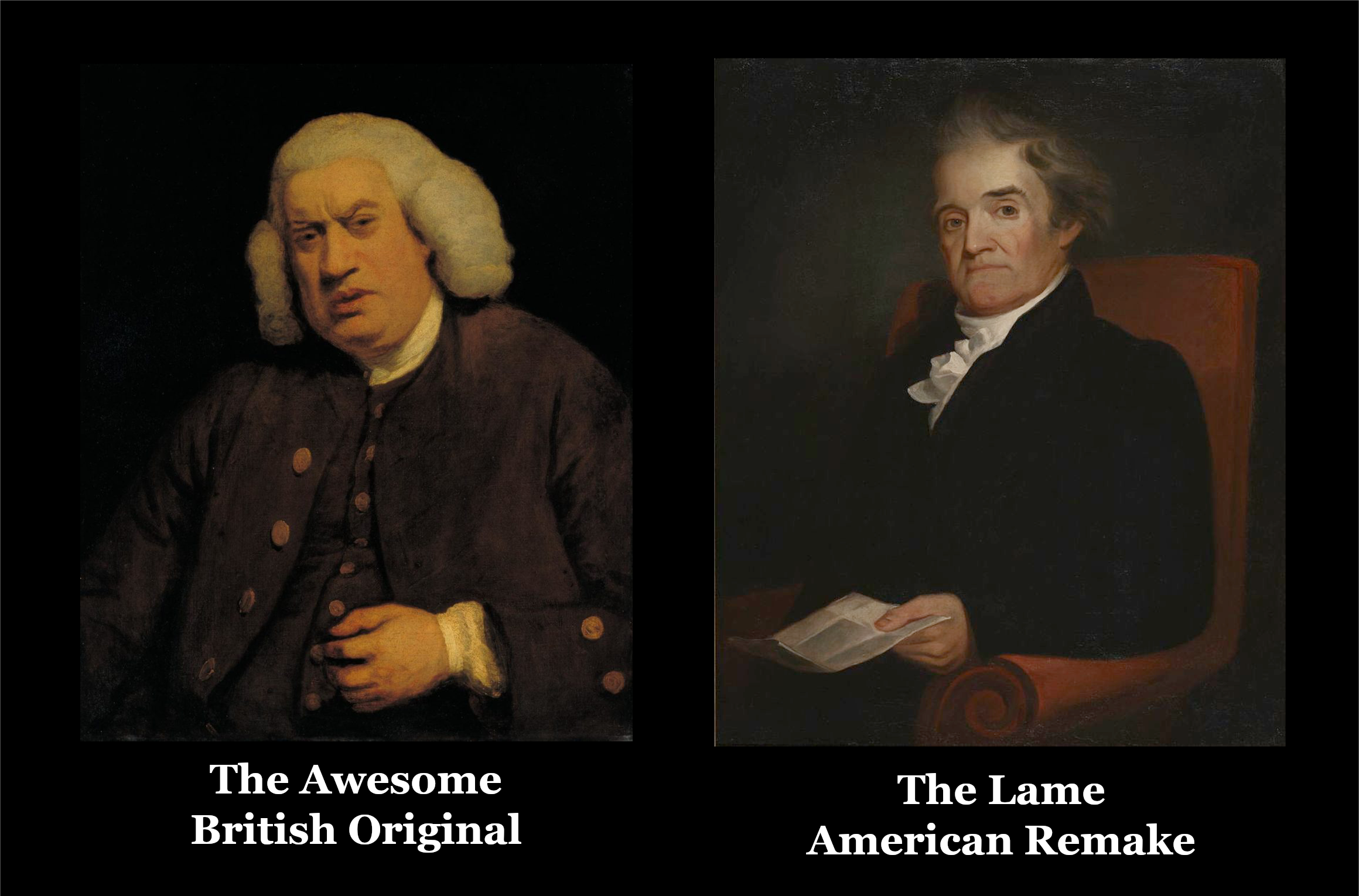
7. And to end with what you all came to see: Lexicographer memes!
 Serpent's Den